Context
From 2024, Contentsquare merged three distinct analytics products into one cohesive product experience.
Each product with its own integration catalog with different structures, feature sets, visual and design languages.
Goal
The brief was clear:
one catalog, for all customers, across all plans.
But the ambition behind it was larger than unification for its own sake.
Role
Hands-on Product Design Director. I owned the design vision, the information architecture and the end-to-end UX of the catalog.
Worked closely with PM and engineering to align on scope and to deliver.
Bringing it together
Understand what each of the three catalogs was actually good at.
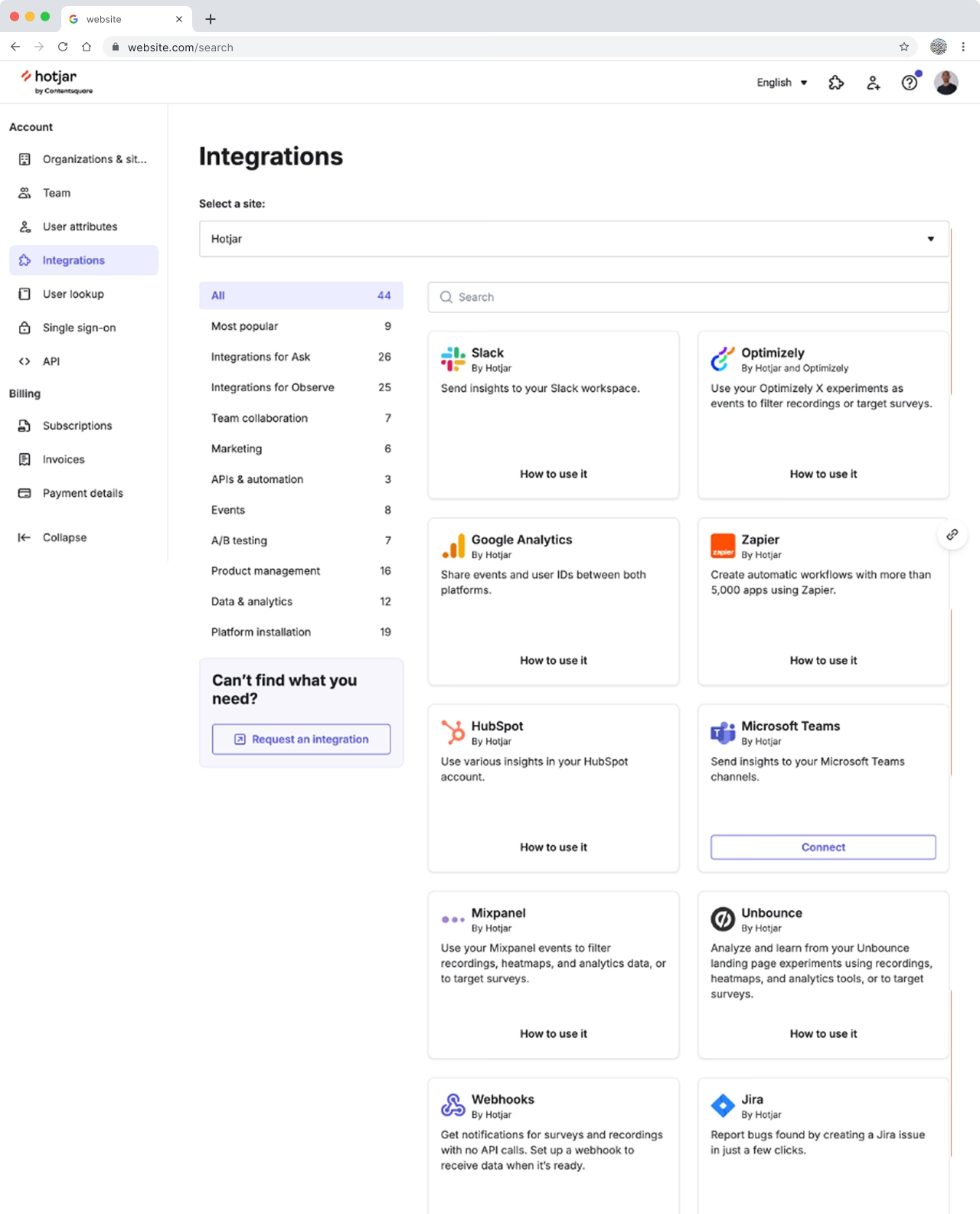
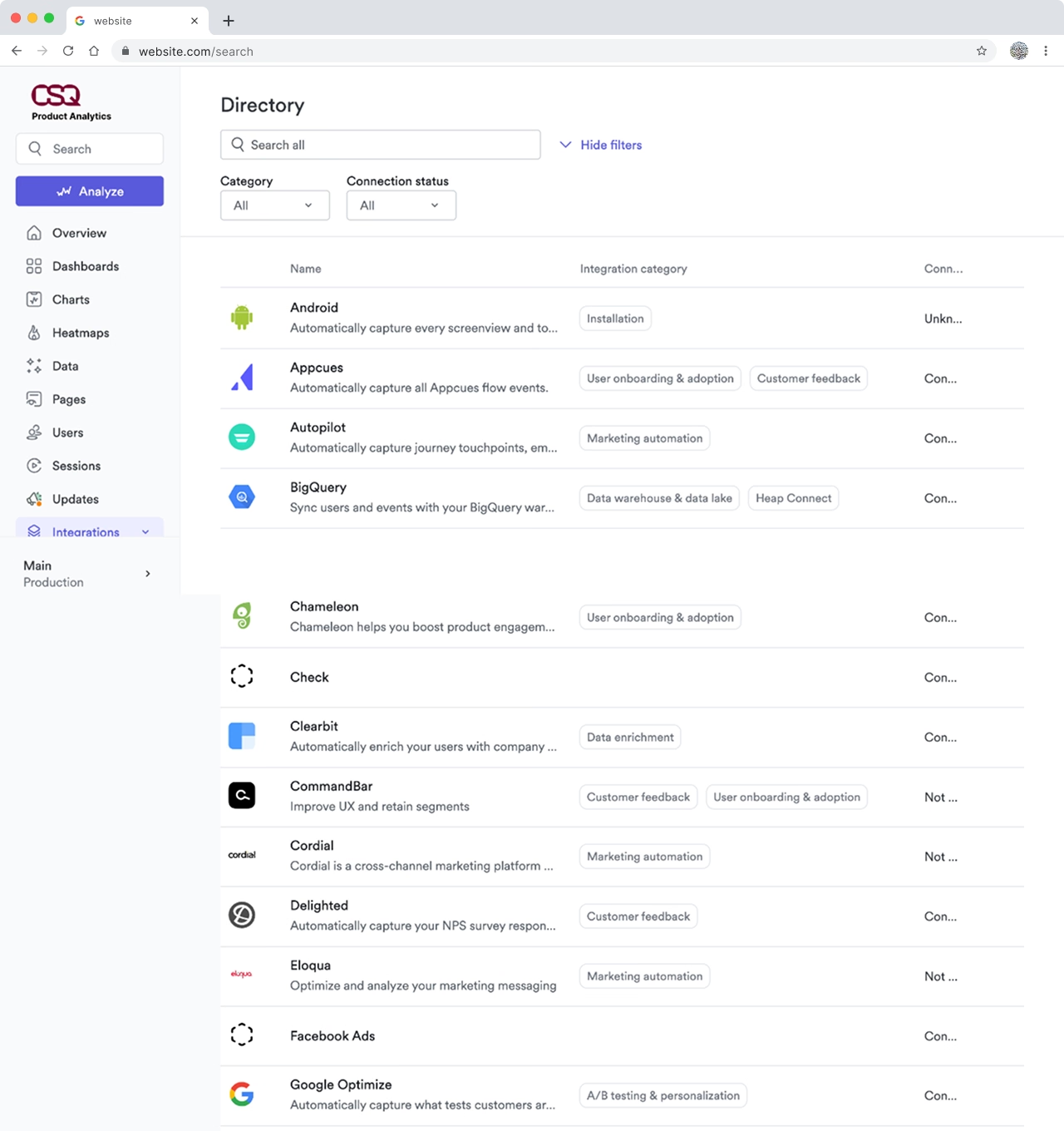
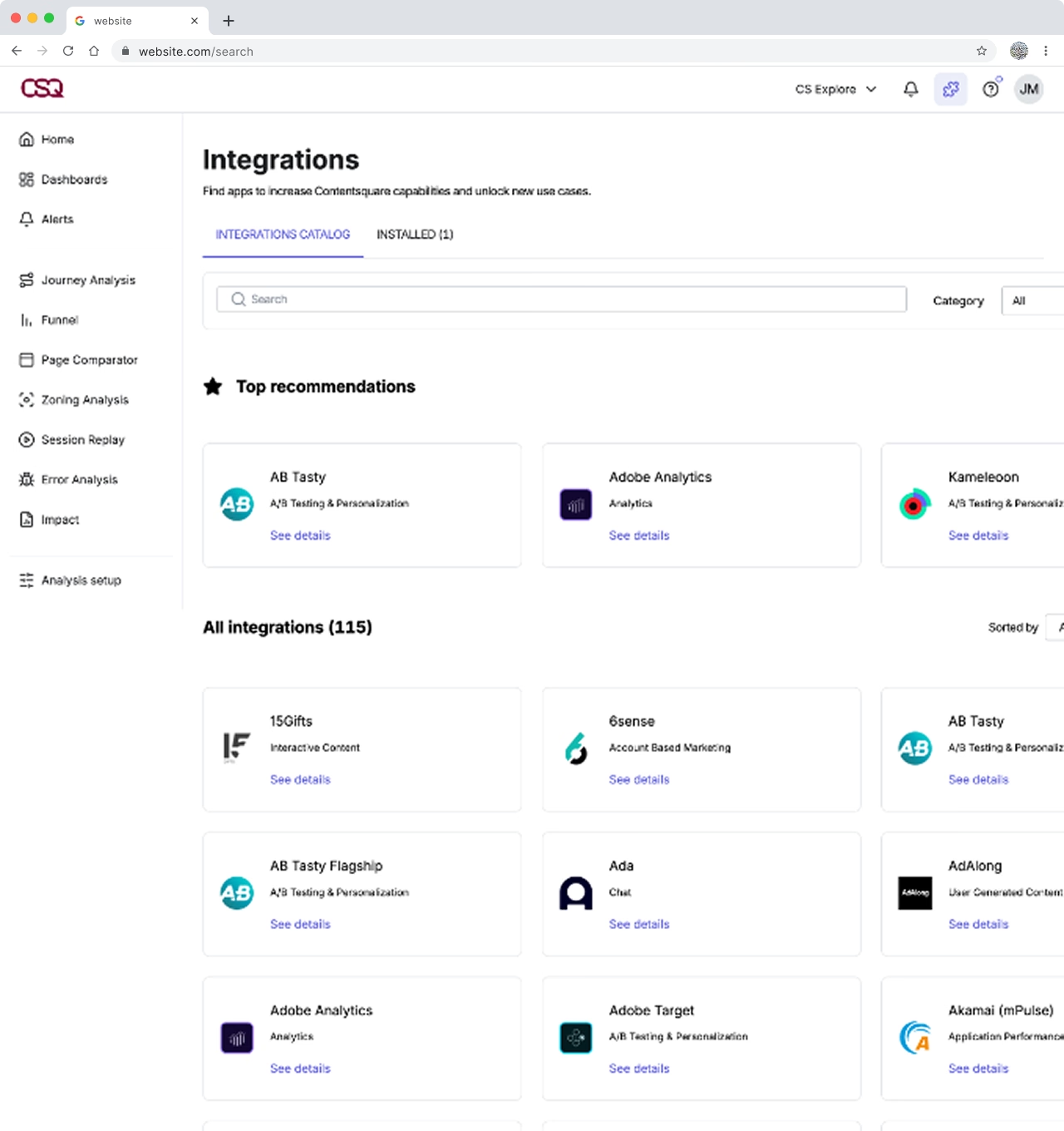
I went through the three experiences with the same question: how to find, install and use the right integration?
This audit surfaced real differences in approach. Hotjar's catalog was lightweight and fast.
Heap's was more data-rich, with stronger filtering logic. CSQ's was more exhaustive but harder to navigate.
One goal: to take what worked best from each and build something more considered.
Results
The unified catalog launched progressively between September and October 2025, in line with the broader One App rollout.
By October 20th, 100% of new self-serve traffic across all platforms was routed through the new catalog.
Consolidation & migration
Three catalog frontends collapsed into one system, with its 12 active Heap integrations migrated by real usage, Shopify, Appcues, Chameleon, and AB Tasty first.
Self-serve install
80% of integrations in the new catalog support self-serve install.
This directly reduces support load and shortens the time between a customer discovering an integration and getting value from it.
Foundation
The catalog structure and the contextual awareness layer were in place to support what was next: migrating existing Hotjar and CSQ SMB customers, expanding the library of integrations, and progressively introducing AI-powered recommendations.
The design is built to scale, this was a deliberate decision from the start.
Aligning the team
Before any IA work, the team needed a shared picture of where we were and what was actually blocking us.
A speedboat workshop surfaced that quickly.
Winds, anchors, and destination helped the group align on what was blocking catalog unification and what we were actually building toward.
The output shaped most of the decisions that followed.

Journey: from search to active value
I mapped the full journey: land → find → understand → install → data flows.
Each step had drop-off risk. The detail page had to work hard:
show the benefit, reveal what data moves, make setup feel approachable for non-technical users.
Self-serve install was the goal for 80% of the catalog. The legacy catalogs dropped the ball on post-install:
what happens after you connect? Is it working? That gap hurt retention. We fixed it.
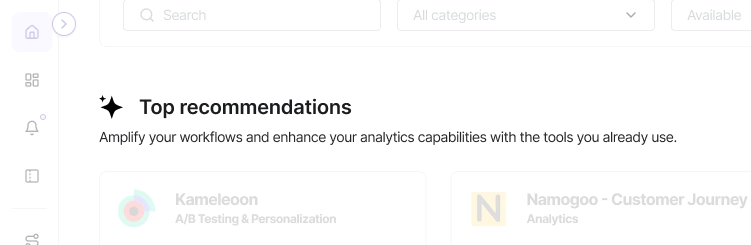
Contextual awareness at the catalog level
The catalog already knew which integrations were active for each customer. That was going unused.
The direction shifted from a browsable library to something more active.
A surface that brings the right integration to the right customer at the right moment.
PLG upsell entry points first. More value at each release after that. This was an important competitive angle: turning a passive catalog into a dynamic recommendation surface.
Upsell embedded in the experience
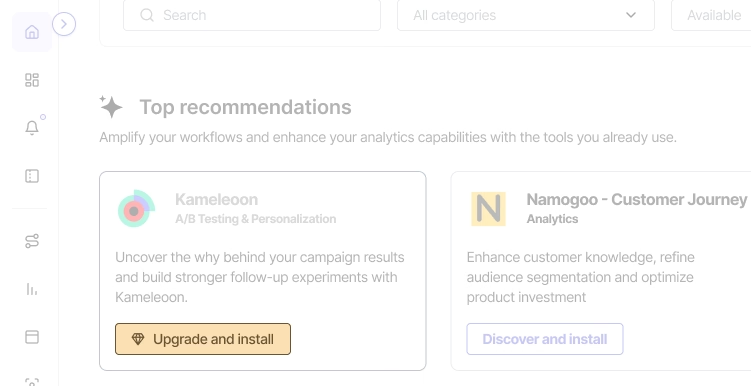
I worked on a way to surface integrations that were gated by plan.
Design purpose was to turn a locked integration into a conversion moment and not into a frustration.
This is directly connected to the adjacent growth and pricing logic in the overall platform.
Tomorrow: AI and automation
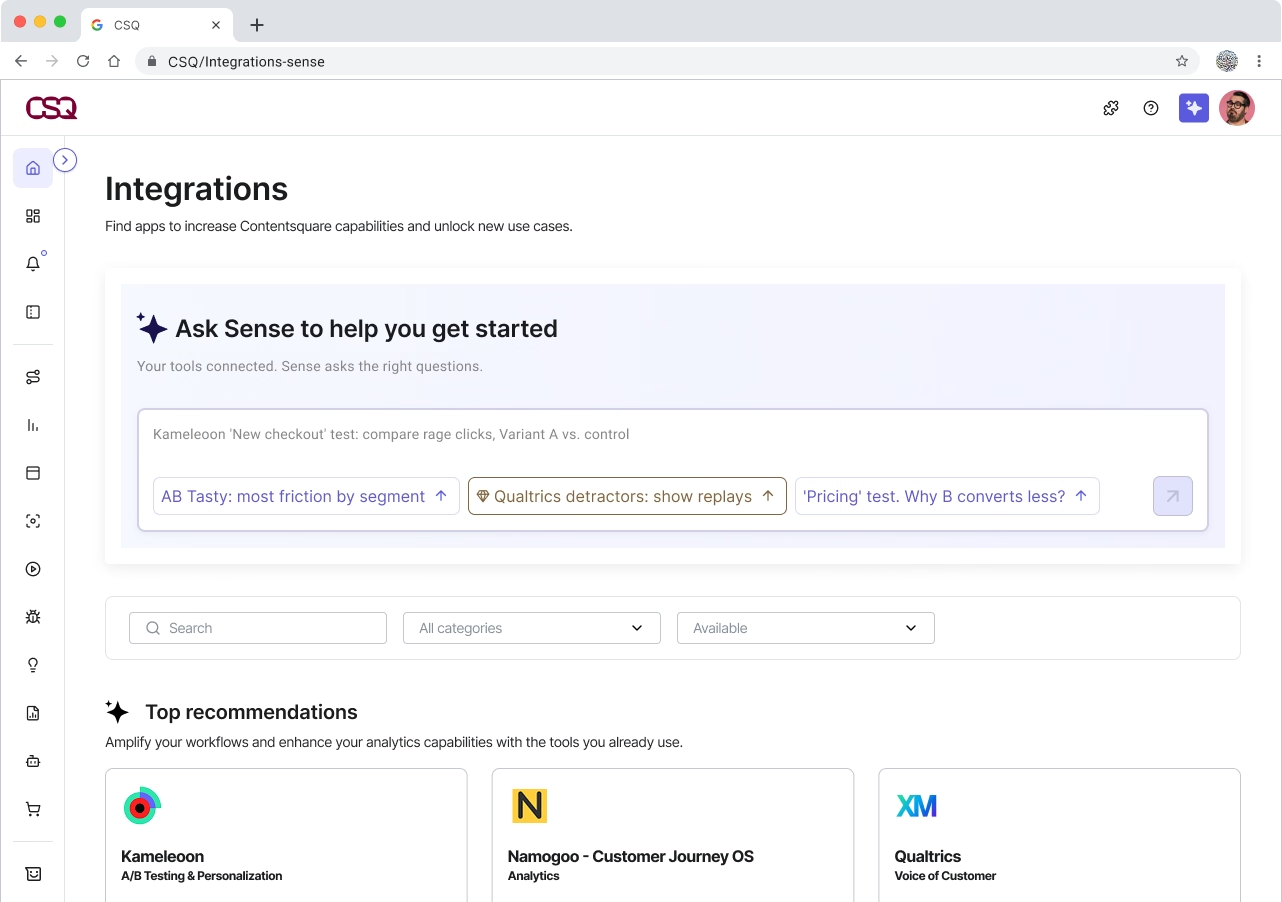
During the design exploration, I mapped a medium-term vision for where AI could play a role in the catalog.
The idea was to move toward a catalog that understands a customer's usage patterns and proactively recommends integrations to specific insights they are not currently getting.
That directional work is not yet shipped. It shaped the catalog structure, particularly how integration metadata is organized and how recommendations are surfaced.
Want to discuss this?
Other case studies
Seamless data export
Contentsquare
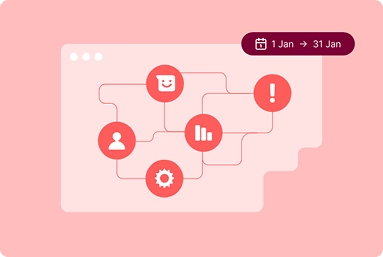
Bring Contentsquare behavourial data in the client ecosystem with a new feature.
Analysis Setup Navigation
Contentsquare
The navigation problem Data Connect exposed, and the decision made to ship without fixing it.

ORPI digital platform
Dagobert
Design of a new ORPI real estate marketplace for better competitiveness.